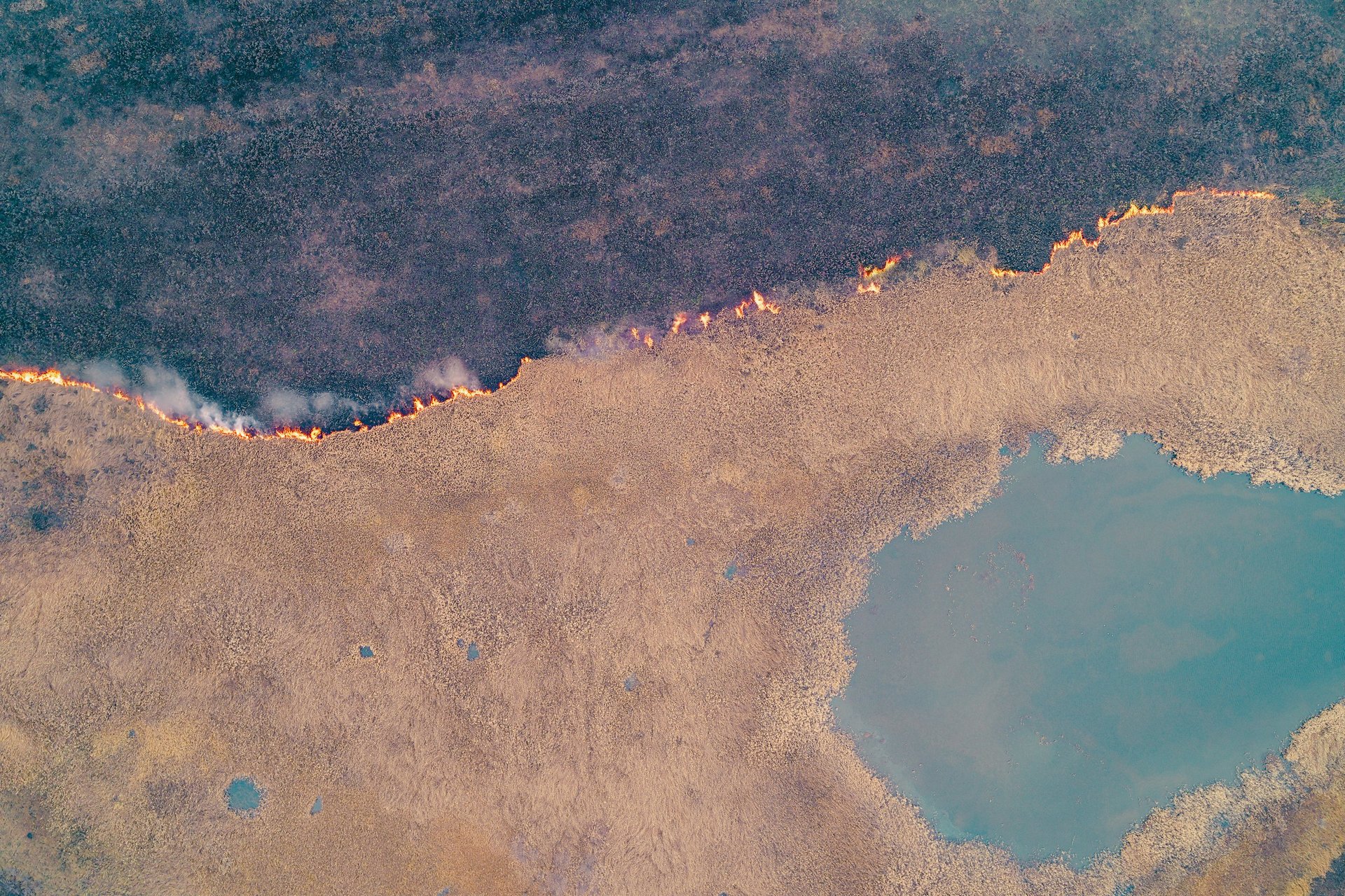
drone shot capturing a fast-spreading wildfire line across dry vegetation, contrasting with the dark, unburned areas and a small patch of water. Environmental disaster.
Fire Mitigation

Fire Mitigation in the Okanagan: The Complete Guide to Protecting Your Property from Wildfire

Wildfire seasons in British Columbia are growing longer and more intense. This comprehensive guide covers everything Okanagan property owners need to know about fire mitigation — from ladder fuel reduction and defensible space to FireSmart principles and professional forestry mulching services.

By The Goat Land Clearing LTD August 3, 2026 14 min read

In This Guide

People Also Ask

How much does fire mitigation cost for an Okanagan property?

Fire mitigation costs in the Okanagan typically range from $1,500 to $12,000+ depending on property size, vegetation density, terrain, and the scope of work. Smaller residential lots (under 1 acre) with light vegetation often start around $1,500–$3,500, while larger acreages or properties with dense ladder fuels and steep terrain can run $5,000–$12,000+. The Goat Land Clearing LTD provides free, no-obligation assessments with a detailed quote within 24 hours. Investing in fire mitigation today costs far less than the devastating financial and emotional toll of a preventable wildfire.

Why Is Fire Mitigation Critical in the Okanagan?

The Okanagan Valley is one of the most fire-prone regions in British Columbia. With its hot, dry summers, abundant pine and fir forests, and increasing frequency of drought conditions, the region has experienced some of BC's most destructive wildfires in recent memory — including the devastating 2003 Okanagan Mountain Park fire that destroyed 238 homes and the 2021 White Rock Lake fire that burned over 83,000 hectares.

Climate change is making things worse. According to the BC Wildfire Service, wildfire seasons are starting earlier, lasting longer, and burning with greater intensity than at any point in recorded history. For Okanagan property owners, this means fire mitigation isn't just recommended — it's essential.

As we covered in our BC Land Clearing Regulations & Permits guide, understanding provincial requirements is critical before starting any land management project. Fire mitigation sits at the intersection of safety, regulation, and smart property management.

Fire mitigation reduces the intensity and spread of wildfires by removing excess vegetation, creating defensible space, and breaking up continuous fuel sources. Properties that have undergone professional fire mitigation are dramatically more likely to survive a wildfire — and in many cases, they can help slow or even stop a fire's advance into neighbouring communities.
What Is Fire Mitigation?

Fire mitigation is the practice of reducing wildfire risk by managing vegetation, removing hazardous fuels, and modifying the landscape to slow or stop the spread of fire. Think of it as proactive land management — you're taking action before a fire starts, rather than reacting after the damage is done.

The core principle is simple: wildfires need three things to burn — heat, oxygen, and fuel. You can't control the heat (BC summers) or the oxygen (the atmosphere), but you can control the fuel. By removing or reducing burnable vegetation near your property, you deprive a wildfire of what it needs to reach your home or business.

Effective fire mitigation involves several interconnected strategies that we'll explore in depth throughout this guide: creating defensible space around structures, reducing ladder fuels that allow fire to climb from ground level into tree canopies, thinning dense tree stands, and maintaining fire-resistant landscaping.

Fuel Reduction

Removing excess vegetation, dead trees, and brush that feed wildfires

Defensible Space

Creating cleared zones around structures to slow fire and protect firefighters

Ladder Fuel Breaks

Removing low branches and mid-level vegetation that let fire climb into canopies

FireSmart Principles for Okanagan Properties

FireSmart BC is the province's official wildfire preparedness program, developed in partnership with the BC Wildfire Service. It provides a science-based framework for reducing wildfire risk at the property and community level. If you own property in the Okanagan, understanding FireSmart principles isn't optional — it's increasingly becoming a requirement from insurers and local governments.

The FireSmart program organizes property protection into three priority zones radiating outward from your home or structure:

1

Zone 1 — Immediate Zone (0–10 metres)

This is the most critical zone — the 10 metres directly surrounding your structure. Keep this area clear of combustible materials. Remove dry leaves, pine needles, and debris from gutters and roofs. Use non-combustible landscaping materials like gravel or stone. Plant fire-resistant species and keep lawns mowed short. Store firewood at least 10 metres away from any building.

2

Zone 2 — Intermediate Zone (10–30 metres)

In this zone, thin trees so there's at least 3 metres between crowns. Remove all ladder fuels — branches within 2 metres of the ground, shrubs growing under trees, and deadfall. Keep grass mowed and create fuel breaks using driveways, pathways, or gravel beds. This is where professional forestry mulching excels, as discussed in our forestry mulching comparison guide.

3

Zone 3 — Extended Zone (30–100 metres)

In the extended zone, focus on thinning dense forest stands to reduce the intensity of an approaching wildfire. Remove dead and dying trees, prune branches up to 2 metres, and create natural firebreaks. This zone is particularly important for rural and acreage properties common throughout the Okanagan Valley.

Ladder Fuel Reduction: The Key to Wildfire Defense

Ladder fuels are one of the most dangerous — and preventable — wildfire hazards on any Okanagan property. These are the low-hanging branches, shrubs, saplings, and dead vegetation that create a "ladder" for fire to climb from the forest floor into the tree canopy.

Once fire reaches the canopy (also called a "crown fire"), it spreads explosively — jumping from treetop to treetop faster than ground crews can respond. Crown fires are responsible for the most destructive wildfires in BC history, including the 2003 Kelowna fires.

The good news? Ladder fuel reduction is straightforward and highly effective. By removing vegetation in the vertical space between ground level and the lower branches of mature trees, you break the fire's path upward. A properly managed forest with reduced ladder fuels can stop a ground fire from becoming a catastrophic crown fire.

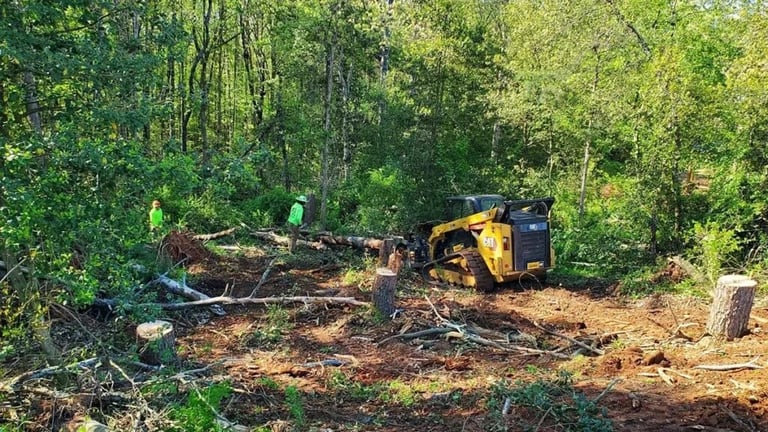
Our forestry mulching services are particularly well-suited for ladder fuel reduction, grinding understory vegetation into beneficial mulch in a single pass.

Yellow bulldozer clearing land in a forest with logs and debris scattered on the ground

Professional Ladder Fuel Reduction

Forestry Mulching Technology

Creating Defensible Space Around Your Property

Defensible space is the buffer zone you create between your property and the surrounding wildland. It's designed to slow or stop the advance of wildfire and provide firefighters with a safe area to defend your structure. In the Okanagan's fire-prone landscape, defensible space isn't just smart — in many municipalities it's becoming mandatory.

The concept comes from the FireSmart BC program and is based on decades of wildfire behaviour research. Properties with adequate defensible space have a survival rate of over 80% during wildfire events, compared to less than 20% for unprotected properties.

Clear combustibles within 10 metres of all structures

Remove dry vegetation, dead plants, pine needles, leaf litter, and any flammable debris. Use gravel, stone, or concrete within the first 1.5 metres of your foundation.

Prune tree branches 2 metres from the ground

This is especially important for conifers like ponderosa pine and Douglas fir, which dominate Okanagan forests.

Space trees 3 metres apart at crown level

Proper spacing prevents fire from jumping between tree canopies and creates natural breaks in the fuel continuum.

Create fuel-free zones around propane tanks and outbuildings

Extend the 10-metre clearance to any structure that could become a fuel source during a wildfire.

Maintain a 30-metre managed zone

Beyond the immediate 10 metres, extend fuel management to at least 30 metres, focusing on thinning and ladder fuel removal. For sloped properties (common in the Okanagan), extend this zone further downhill, as fire spreads faster uphill.

Professional Fire Mitigation Methods

The right tools and techniques make all the difference. Here are the professional methods we use for fire mitigation in the Okanagan:

Forestry Mulching

Our primary fire mitigation tool. A single-pass process that grinds trees, brush, and ladder fuels into beneficial mulch — leaving soil protected and fire fuels eliminated. As we detailed in our mulching comparison, this method is faster, cleaner, and better for the land than traditional clearing.

Selective Tree Thinning

Strategic removal of select trees to achieve proper spacing (3+ metres between crowns). Focused on dead, dying, and overcrowded trees. Preserves healthy, mature specimens while breaking up continuous fuel.

Pruning & Ladder Fuel Removal

Removing branches up to 2 metres from ground level and clearing understory vegetation that acts as ladder fuel. This is the most critical step for preventing ground fires from becoming crown fires.

Fuel Break Creation

Creating strategic gaps in vegetation that slow or halt fire spread. Driveways, gravel paths, and cleared strips serve as firebreaks that protect your structures and give firefighters a fighting chance.

Fire Mitigation Costs in the Okanagan

Fire mitigation is an investment in your property's safety — and compared to the devastating cost of wildfire damage, it's one of the smartest investments you can make. Costs vary based on several factors: property size, terrain steepness, vegetation density, and the scope of work required.

Residential Properties

Small to medium residential lots in Kelowna, Penticton, Vernon, and surrounding communities.

$1,500 – $5,000

For lots under 1 acre with light to moderate vegetation. Includes ladder fuel removal, pruning, and defensible space creation.

Acreages & Rural Properties

Larger rural properties, hobby farms, and acreages throughout the Okanagan Valley.

$3,500 – $12,000+

For 1–10+ acres. Includes forestry mulching, selective thinning, fuel break creation, and comprehensive FireSmart zone management.

Factors That Influence Cost

Property Size

Larger properties require more time, equipment, and material processing.

Terrain & Slope

Steep Okanagan hillsides require specialized equipment and slower, more careful work.

Vegetation Density

Dense understory and heavy ladder fuels increase processing time significantly.

Accessibility

Difficult access or remote locations may require additional equipment mobilization.

Note: These are estimated ranges. Every property is unique. We provide free, detailed assessments with an exact quote within 24 hours. Many BC insurers offer discounts for properties with professional fire mitigation — ask your provider.

BC Fire Mitigation Regulations & Requirements

British Columbia has implemented increasingly stringent fire mitigation requirements in recent years, particularly in high-risk zones like the Okanagan. Understanding these regulations is essential before beginning any fire mitigation work on your property.

As we outlined in our comprehensive BC Land Clearing Regulations & Permits guide, provincial and local regulations can overlap, and requirements vary by municipality.

Provincial Requirements

  • Wildfire Act & Regulation: Requires property owners to manage fire hazards on their land. Failure to comply can result in significant fines and liability for fire suppression costs.
  • FireSmart BC: The province strongly recommends (and in some areas requires) adherence to FireSmart principles. Many local governments now mandate FireSmart assessments for new construction in wildland-urban interface areas.
  • Open Burning Bans: The Okanagan is frequently under open burning restrictions. Our forestry mulching eliminates the need for burning entirely. For more on this, see our Property Maintenance Guide.

Local Okanagan Requirements

  • Kelowna: Requires development permits in wildfire hazard areas. FireSmart assessments are mandatory for new builds in identified interface zones.
  • Penticton & Area: The Regional District of Okanagan-Similkameen has adopted FireSmart as part of its community wildfire protection plan. Rural properties may be subject to fuel management orders.
  • Vernon & North Okanagan: The North Okanagan Regional District requires fire hazard assessments for certain development applications and strongly encourages FireSmart certification for rural properties.

Important

Regulations change frequently and vary by specific location within the Okanagan. Always verify current requirements with your local government before starting fire mitigation work. Contact us and we can help you navigate the regulatory landscape.

Our Fire Mitigation Process

We follow a proven, systematic approach to fire mitigation that ensures your property is fully protected while maintaining its natural beauty. Here's how it works:

1

Free On-Site Assessment

We visit your Okanagan property to evaluate vegetation density, identify ladder fuels, assess terrain, and determine the appropriate FireSmart zones. You'll receive a detailed, no-obligation quote within 24 hours. Schedule yours here.

2

Custom Mitigation Plan

We develop a property-specific plan that maps out defensible space zones, identifies trees for selective thinning, and prioritizes ladder fuel reduction areas. Every plan follows FireSmart BC guidelines.

3

Professional Execution

Our GEHL RT 250 forestry mulcher and skilled crew execute the plan efficiently — typically completing most residential projects in 1–3 days. Ladder fuels are ground into beneficial mulch, trees are thinned and pruned, and defensible space zones are established.

4

Post-Work Review & Maintenance Plan

After completion, we walk your property with you to review the work done and provide a maintenance schedule. Fire mitigation isn't one-and-done — it requires periodic maintenance. We'll help you stay FireSmart year after year. Our BC Property Maintenance Guide has more on long-term upkeep.

Frequently Asked Questions About Fire Mitigation in the Okanagan

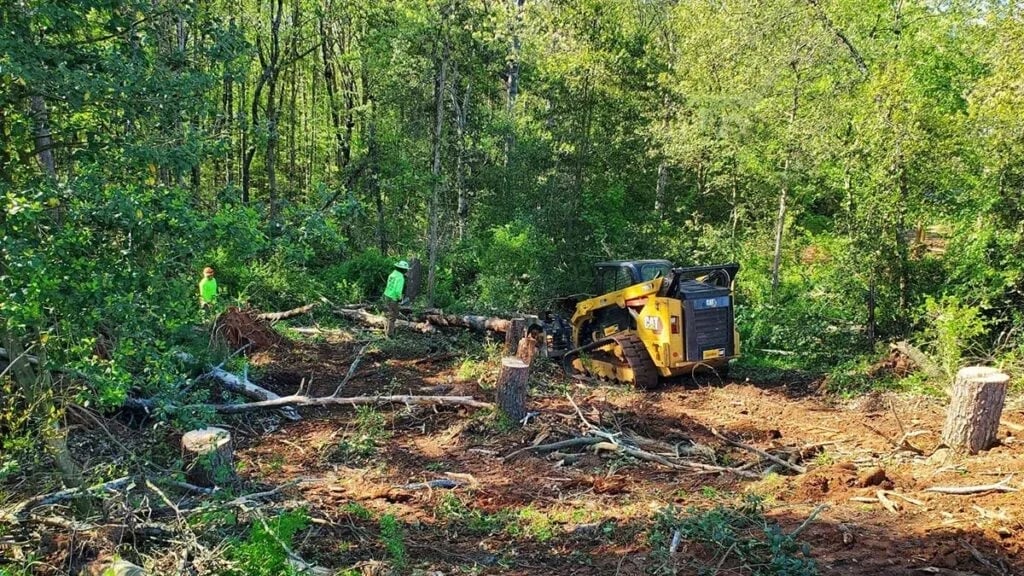
Yellow bulldozer clearing forest with workers and cut logs surrounded by dense green trees

Protect Your Okanagan Property Before the Next Fire Season

Wildfire doesn't wait. Professional fire mitigation from The Goat Land Clearing LTD gives you peace of mind, insurance savings, and a property that's prepared for whatever fire season brings. Serving Kelowna, Penticton, Vernon, and all Okanagan communities.