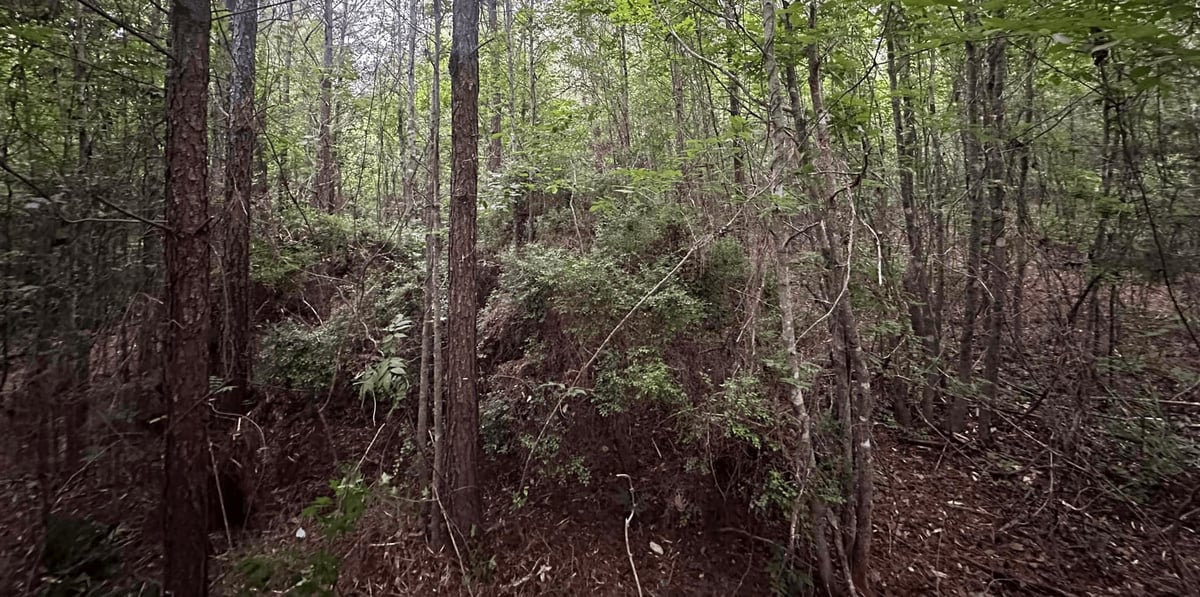
Discover the most effective methods for eliminating Himalayan blackberry invasives from your Fraser Valley property—without wasting time on ineffective DIY approaches.
Himalayan blackberry can take over properties in just a few seasons if left untreated
If you're a British Columbia property owner, you've almost certainly seen Himalayan blackberry—those thick, arching canes with wicked thorns that seem to spread overnight. What started as a single planting in the 1800s has become one of the most widespread invasive plants in North America, and the Fraser Valley is ground zero.
The bad news: Himalayan blackberry is incredibly difficult to eliminate. The good news: it IS possible with the right approach. In this guide, The Goat Land Clearing shares what works, what doesn't, and how to finally reclaim your property from this invasive pest.
Whether you've just noticed a few canes in your backyard or your entire acreage has been consumed by blackberry thickets, this guide will help you understand your options and choose the right path forward.
Even cleared land can be quickly overrun if blackberry regrowth isn't properly managed
Before we dive into removal methods, it's important to understand why Himalayan blackberry is such a tenacious adversary. This knowledge will help you understand why many approaches fail and what it takes to actually win the battle.
Himalayan blackberry roots can extend over 20 feet horizontally and 10 feet deep. Even if you remove visible canes, roots in the soil can regenerate new growth for years.
Even small root fragments left in soil can sprout new plants. This is why hand-pulling or shallow machine clearing almost never works—you always leave pieces behind.
Birds eat blackberry fruit and spread seeds across your property—and to neighboring properties. New plants constantly emerge even after you've cleared the main infestation.
Canes that touch the ground root at the tips, creating new plants. One plant can spread across your entire property in just a few seasons through this mechanism alone.
Every spring, homeowners across the Fraser Valley try their hand at blackberry removal—only to watch it come back stronger than before. Here's why common DIY approaches don't work:
Pulling by hand removes visible canes but leaves roots intact. Within weeks, new shoots emerge from the massive root system. The thorns make this physically exhausting work for minimal results.
Cutting canes at ground level looks like progress, but the root system is unharmed. Blackberries actually respond to cutting by sending up MORE shoots. You end up with a denser thicket than before.
While herbicides can kill visible growth, the root system often survives and regenerates. Repeated applications are needed, and environmental concerns (contamination of water, harm to beneficial plants) make this approach less attractive. Additionally, many homeowners aren't comfortable applying chemicals themselves.
BC regulations heavily restrict open burning, and for good reason. Even if you could burn, fire kills only what it touches—roots survive underground and regenerate. Burning also creates fire risk and air quality issues.
Smothering blackberry with tarps or cardboard sometimes works for small patches over long periods (6-12 months), but it's impractical for large areas and the thorns often puncture through the barrier.
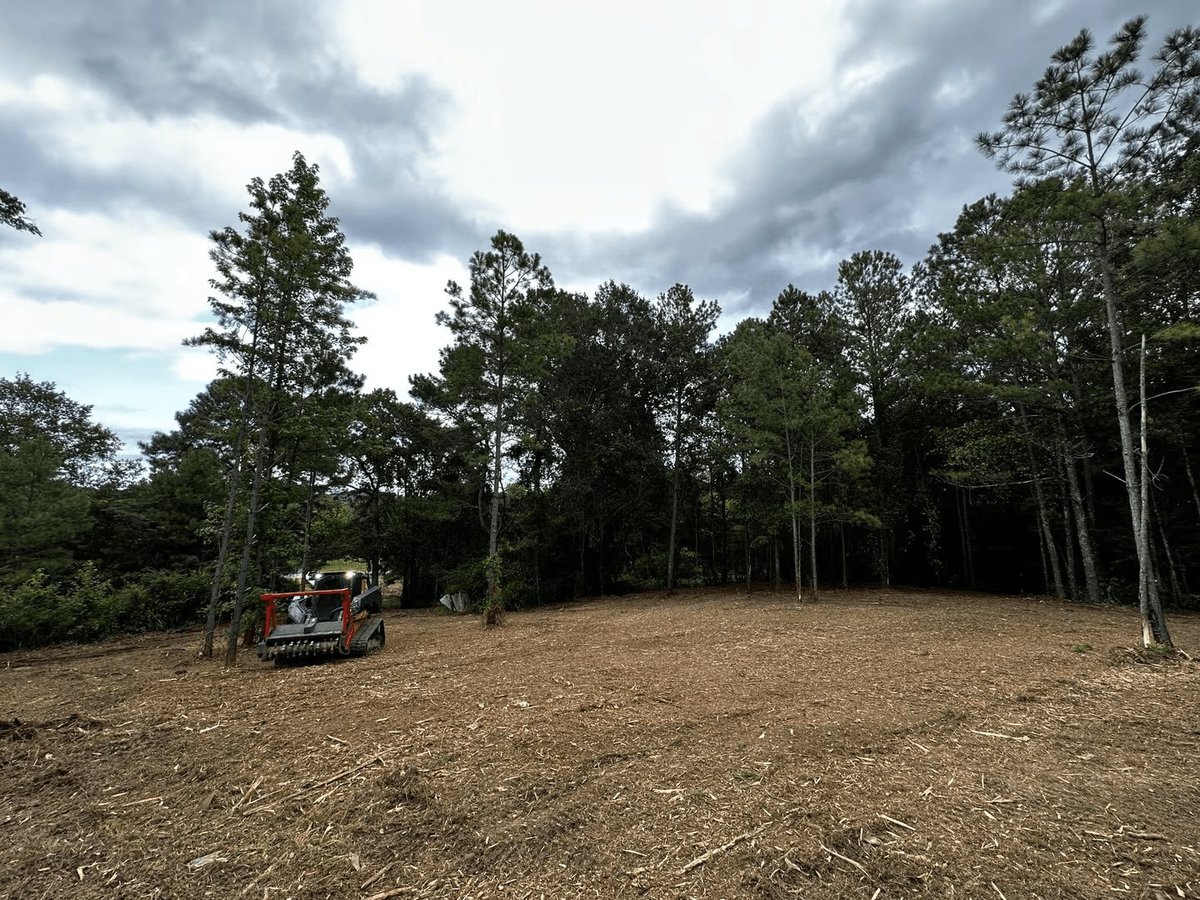
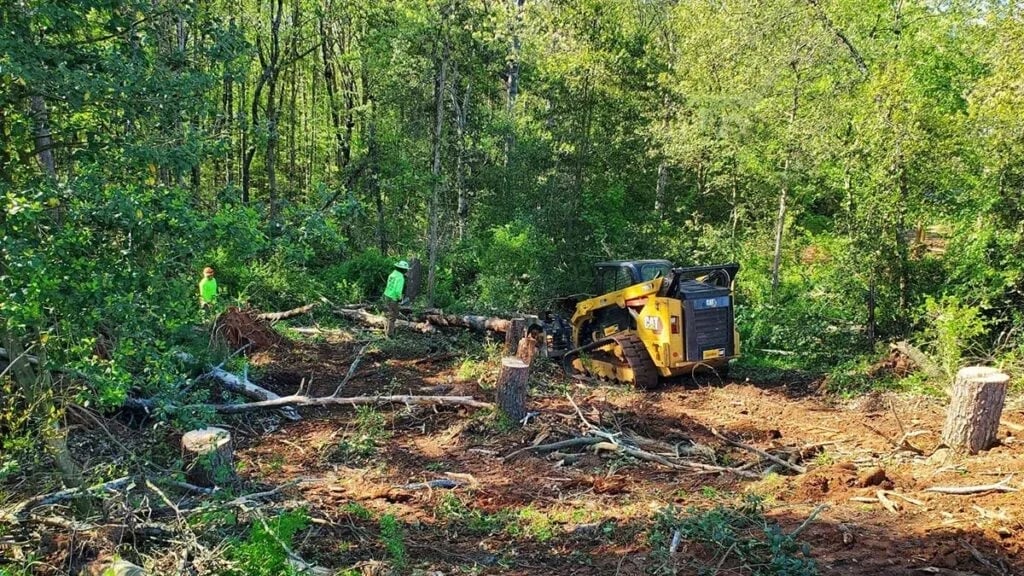
Professional forestry mulching equipment grinds roots below the soil surface for permanent removal
After years of fighting blackberry with various methods, land clearing professionals have found that forestry mulching is the most effective approach for permanent control. Here's why:
Forestry mulcher drum grinders reach below the soil surface, destroying the root crown where the plant stores energy. Without the main root, regeneration is dramatically reduced.
The high-speed drum processes everything in its path—no missed fragments, no gaps. Every root fragment is ground into mulch, eliminating regeneration points.
All-natural approach that doesn't contaminate soil or water. Safe for surrounding plants, pets, and children. The resulting mulch enriches soil rather than harming it.
Mulch stays on-site, protecting soil from erosion while organic matter decomposes. Unlike removal methods that leave bare soil vulnerable to rain and wind.
The cost of professional blackberry removal in BC depends on several factors. Here's what affects pricing:
Get a free on-site estimate for accurate pricing on your property.
Addressing blackberry early—before it has years to spread and establish massive root systems—significantly reduces costs. Annual maintenance costs far less than clearing an established infestation.
Himalayan blackberry seeds are spread by birds and can deposit new plants on your property even after successful removal. Follow-up treatments 4-6 weeks after initial clearing address any regrowth from roots. Annual maintenance passes can address new seedlings before they establish. With proper follow-up, permanent control is achievable.
For a typical residential property (0.25-0.5 acres), initial clearing takes 1-2 days. Follow-up treatment happens 4-6 weeks later and takes a few hours to half a day. Properties with extreme infestations may need more time, but forestry mulching is significantly faster than traditional methods.
Yes, you can remain on the property during work. There's no need to relocate. We'll coordinate with you on access and any areas that need to be cleared around. The process is generally quiet enough for normal activities, though you may want to avoid the immediate work zone for safety.
Himalayan blackberry (Rubus armeniacus) is the aggressive invasive with large, rounded leaves and white to pink flowers—it's the one taking over BC properties. Cutleaf blackberry (Rubus laciniatus) is less common and has deeply serrated leaves. Both require similar removal approaches, though Himalayan is the primary target of control efforts in the Fraser Valley.
No—in fact, it improves soil. The mulch left behind is organic material that decomposes and returns nutrients to the soil. Unlike removal methods that strip organic matter, forestry mulching adds it back. There's no need to import topsoil or worry about soil degradation.
Get a free on-site assessment and quote for professional blackberry removal in the Fraser Valley. Permanent results, no chemicals, and follow-up included.