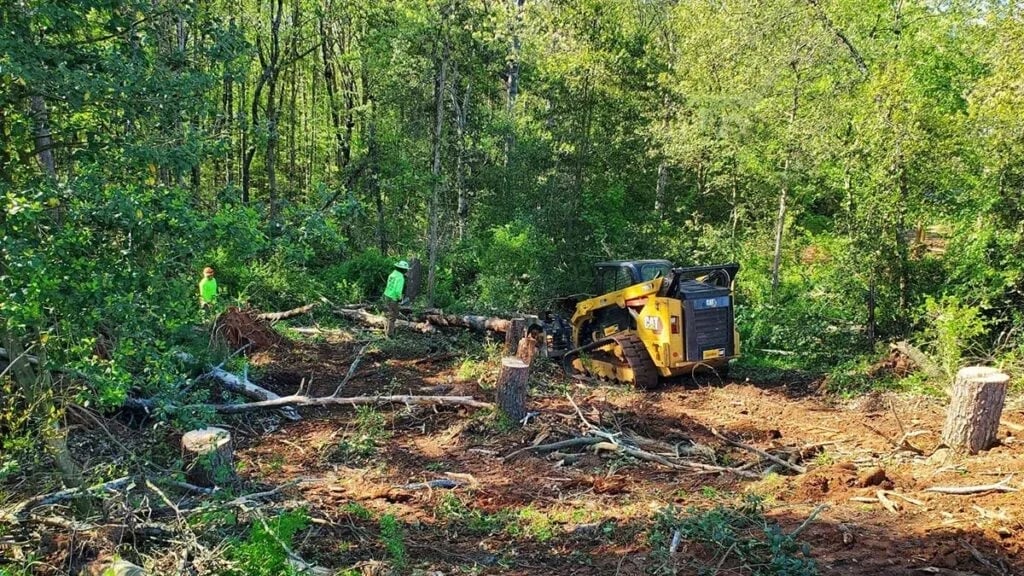
Yellow bulldozer clearing forest with workers and cut logs surrounded by dense green trees
Land Clearing Guide

Do I Need a Permit to Clear Trees on My Property?

Understanding the legal requirements for tree clearing in the Fraser Valley before you pick up the phone and book an excavator.

By The Goat Land Clearing LTD Aug 25, 2026 9 min read

The Short Answer

Yes, in most cases you likely need a permit to clear trees on your property in the Fraser Valley—but the exact requirements depend on where you live, how many trees you're removing, and what the property will be used for. Lower Mainland municipalities, including Langley, Abbotsford, Maple Ridge, Mission, Pitt Meadows, Agassiz, and Hope, each have their own tree protection bylaws. Some properties fall under the Agricultural Land Reserve (ALR) with different rules, while others may be exempt if you're clearing for wildfire protection or emergency access. The safest rule of thumb: always confirm with your local municipality before any tree comes down.

1. When Do You Actually Need a Permit?

The honest answer is that there is no single "Yes" or "No" across British Columbia—the rules are set by each municipality, district, and regional district. In the Fraser Valley, almost every city has a Tree Protection Bylaw that regulates the cutting, removal, and significant pruning of trees. These bylaws are in place to preserve the region's urban forest canopy, protect wildlife habitat, and manage stormwater.

In general, you will need a permit or approval from your municipality before clearing trees when any of the following applies:

  • You're removing more than a small number of trees (often as few as one "significant" tree, defined by trunk diameter).
  • The tree has a trunk diameter above the City's threshold (commonly 20–30 cm measured at chest height).
  • The tree is a protected species like Garry oak, cedar, or arbutus.
  • The trees are located in an environmentally sensitive area, near a watercourse, or inside a Development Permit Area.
  • You plan to build, subdivide, or change the use of the land — significant clearing almost always triggers permitting and possibly a development application.

Even when a permit isn't strictly required by letter of the bylaw, many municipalities still require you to notify them or obtain a "tree removal" application. The consequence of skipping this step can be steep: fines that range from a few hundred to several thousand dollars per tree, plus the requirement to replant or pay into a tree replacement fund.
2. Fraser Valley Municipal Rules at a Glance

Because the rules vary by community, here's a quick orientation to the permit landscape across the main Fraser Valley centres we serve. This is only a general guide—always verify with the local government office before clearing.

Langley

The Township of Langley enforces a Tree Protection and Replacement Bylaw. Permits are generally required to remove trees with a diameter at breast height (DBH) of 20 cm or more. Our Langley land clearing page covers the local service details.

Abbotsford

Abbotsford's Tree Protection Bylaw restricts removal of healthy trees over 30 cm DBH and requires a permit application with rationale. See our Abbotsford land clearing services for the area.

Maple Ridge

Maple Ridge's Tree Protection Bylaw covers all trees above a certain size and requires permits for removal. Our Maple Ridge land clearing team knows the local rules.

Mission, Pitt Meadows, Agassiz & Hope

These communities each maintain their own tree protection rules and often coordinate with the Fraser Valley Regional District (FVRD). Explore our Mission land clearing, Pitt Meadows land clearing, Agassiz land clearing, and Hope land clearing services for those communities.

Pro Tip

The fastest way to avoid a headache is to call your municipality's planning or bylaw department before you plan any clearing. They'll tell you within minutes whether your specific project needs a permit—free of charge.

3. When You Might NOT Need a Permit

There are some genuine exceptions where tree clearing is permitted without a formal removal permit. Common exemptions include:

  • Dead, diseased, or hazardous trees. Most bylaws allow immediate removal of trees that pose a safety risk, though you may still need a permit after the fact or a professional arborist's assessment to document the hazard.
  • Non-permitted species. Invasive species like Himalayan blackberry and certain fast-growing species are typically exempt from protection, and many municipalities actually encourage their removal. Our blackberry removal service focuses on these.
  • Very small trees and brush. Seedlings, saplings, and small trees under the bylaw diameter threshold are almost always exempt. Clearing understory brush and small growth is generally fine without a permit.
  • FireSmart / wildfire protection. Some municipalities fast-track or exempt clearing for defensible space and wildfire mitigation, especially in rural and interface areas. This is increasingly relevant across fire-prone parts of BC.
  • Utility and emergency access work. Utility companies and emergency services may clear trees without standard permits under specific authority.

Even with an exemption, it's wise to get confirmation in writing. A quick note or email from municipal staff protects you if a neighbour complains or an inspector shows up halfway through the job.

4. Agricultural Land Reserve (ALR) Rules

If your property is inside the Agricultural Land Reserve—which is common across the rural Fraser Valley, especially in Abbotsford, Langley, and Agassiz—your clearing is governed by the Agricultural Land Commission (ALC), not just your municipality.

The ALC generally permits clearing that supports farm use, such as bringing land into agricultural production. However, clearing beyond a certain area, removing significant stand of trees for non-farm purposes, or any clearing that changes the land's agricultural capability may require a formal ALC application, which can take several months and requires a non-refundable fee.

Because ALR rules overlap with municipal bylaws, we always recommend confirming both before any work. A professional land clearing company familiar with the region can help you navigate the process and ensure your plan complies from day one.

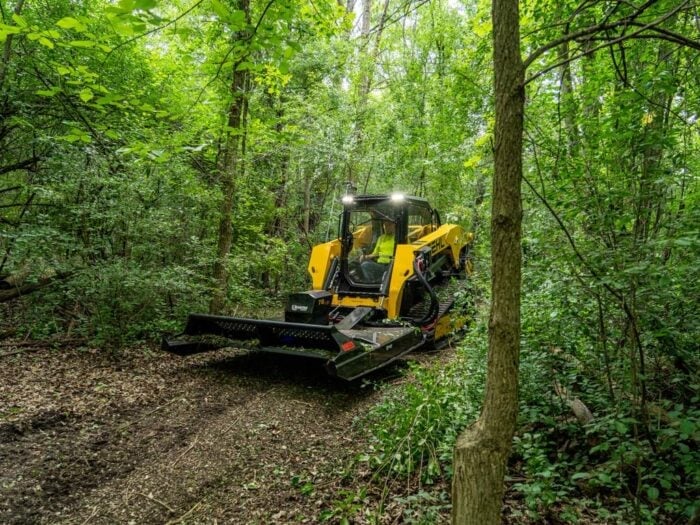
Yellow compact tracked excavator clearing forest path surrounded by tall trees

Understanding local regulations is the first step—then professional equipment gets the job done

5. Step-by-Step: How to Clear Your Property Legally

1

Confirm Your Property Type

Check whether your land is in the ALR, a Development Permit Area, or adjacent to a watercourse. This determines which rules apply.

2

Contact Your Municipality

Call the planning or bylaw department and ask whether your specific clearing project requires a permit. Ask for written confirmation.

3

Submit the Permit Application

If required, complete the tree removal application, which may involve a site plan, arborist report, and replacement tree plan. Fees vary by municipality.

4

Mark Trees to Be Saved

Clearly flag any trees you want to preserve. This protects you if an inspector verifies the work and confirms only approved trees were removed.

5

Hire a Licensed Contractor

Work with a fully licensed and insured land clearing company that understands the local regulations and can execute the clearing cleanly and efficiently—like our residential land clearing services.

6

Complete Replacement Obligations

If your permit requires you to plant replacement trees or pay into a fund, complete this to keep your record clean and avoid future penalties.

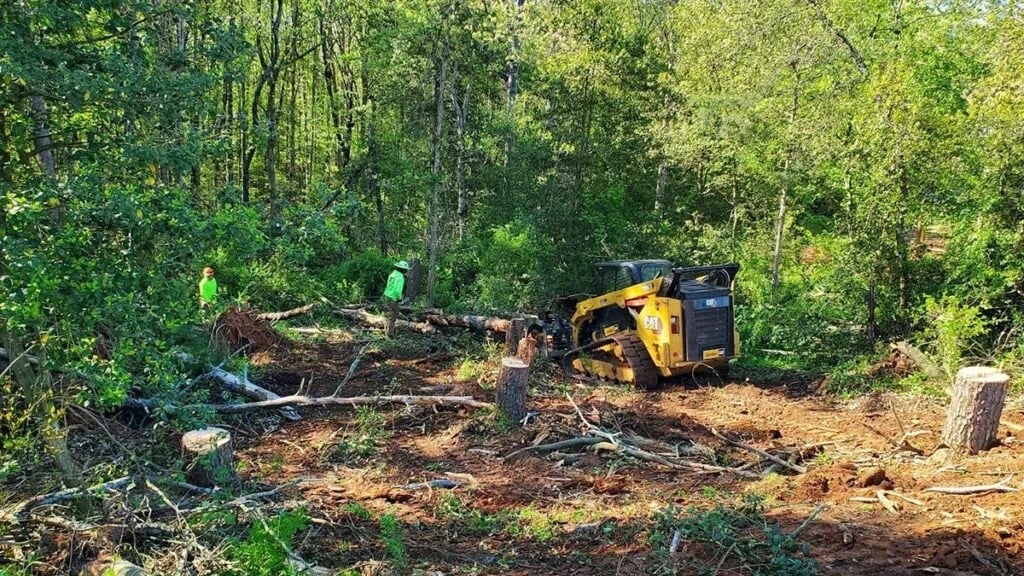
Yellow bulldozer clearing land in a forest with logs and debris scattered on the ground

6. Why Professional Help Makes Compliance Easier

Navigating permits can feel overwhelming, but you don't have to do it alone. A reputable clearing contractor brings more than just heavy equipment—they bring working knowledge of how these processes operate across the Fraser Valley.

At The Goat Land Clearing LTD, we handle the details that keep your project legal and stress-free:

Guidance on local requirements

We know the tree bylaws in Langley, Abbotsford, Maple Ridge, Mission, Pitt Meadows, Agassiz, and Hope—and can steer you toward the right department and application.

Efficient, low-impact clearing

Our land clearing services use advanced forestry mulching technology that grinds vegetation into mulch on-site—reducing debris, protecting topsoil, and minimizing disturbance to the trees you're keeping.

Fully licensed & insured

Working with an insured company protects you from liability and gives you documented proof of professionalism if your municipality asks.

Right-sized timelines

We work around permit timelines so your project stays on schedule—whether that's prepping for construction, agriculture, or a cleaner backyard.

Getting the permit side right means you can move forward with confidence and never look back over your shoulder. The cost of professional help is a small price versus the fines, delays, and replanting costs of an unapproved clear.

7. Frequently Asked Questions

Can I clear a few small trees on my own without a permit?

What happens if I clear trees without a permit?

Do I need a permit to cut down a dead or hazardous tree?

Is the permit process the same for commercial land?

How long does a tree clearing permit take to get?

Can your company help me clear my property across the Fraser Valley?

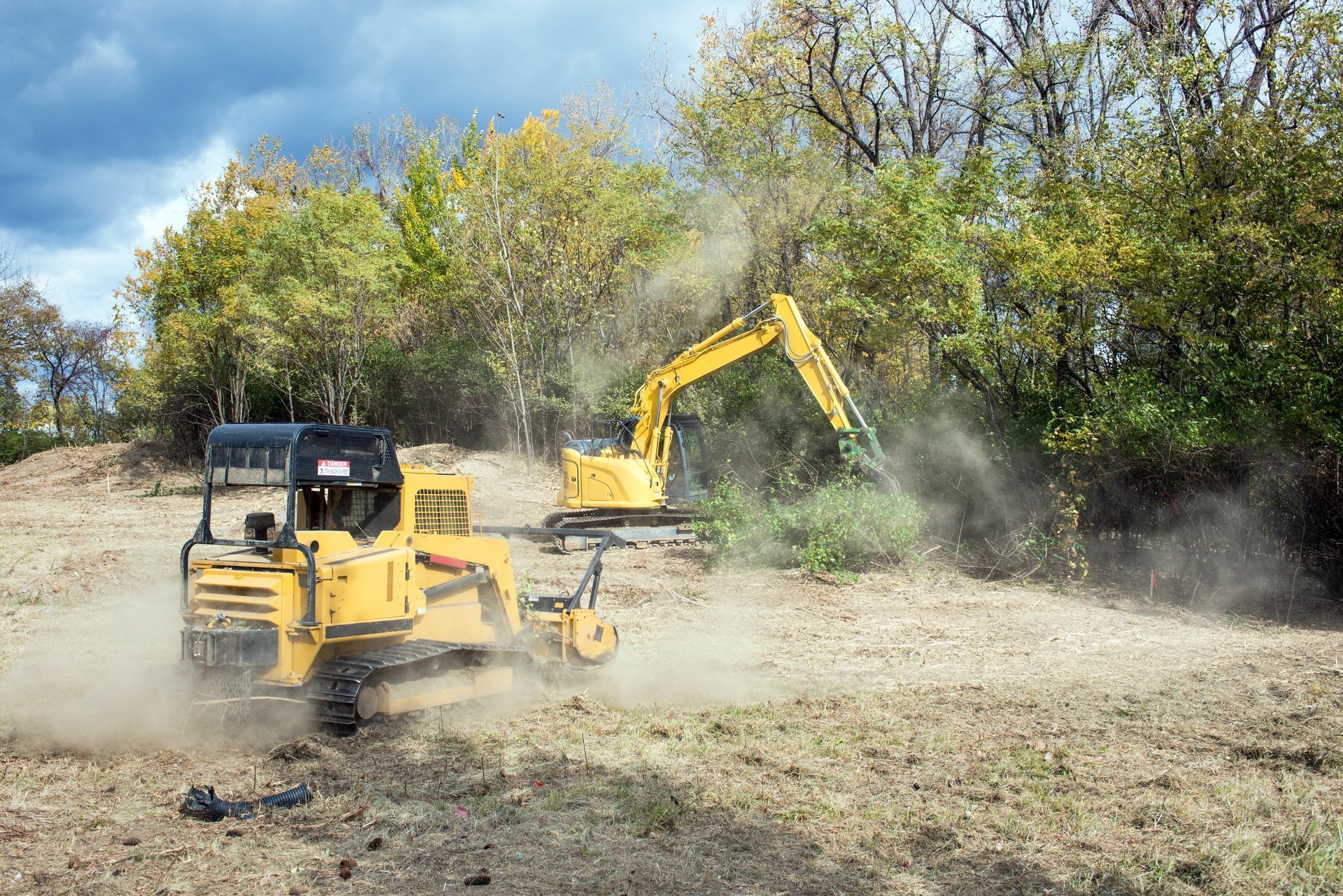
Forestry mulcher and backhoe machinery clearing parcel of land for development

Ready to Clear Your Property the Right Way?

We'll help you understand the permits, meet the requirements, and clear your land quickly and cleanly. Serving the entire Fraser Valley with professional, licensed land clearing and forestry mulching.